

Be first to read the latest tech news, Industry Leader's Insights, and CIO interviews of medium and large enterprises exclusively from Energy Tech Review
A featured contribution from Leadership Perspectives, a curated forum for energy technology leaders nominated by our subscribers and vetted by the Energy Tech Review Editorial Board.

Chief Information Officer at Azule Energy
Turning the Idea into Reality for Azule Energy to Become an Autonomous Company
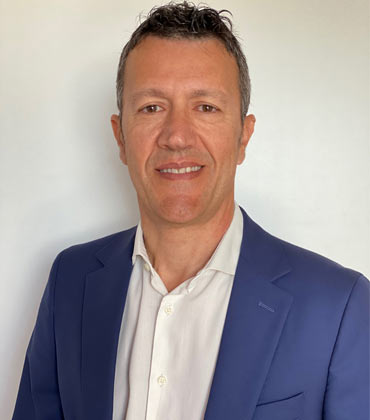
Giuseppe Vitobello
Giuseppe Vitobello is currently serving the position of CIO at Azule Energy.Hepossesses a deep understanding of the Oil&Gas industry with extensive experience in various IT fields, including business applications, infrastructure, and telecommunications. He has also successfully managed complex projects across Europe, Africa, Asia, Russia, and the USA. Known for his commitment and laser focus, Giuseppe has achieved remarkable results, particularly in conducting multiple SAP projectsand also as IT manager of a significant Oil&Gas startup in Iraq.
Can you kindly provide insights into your journey as the CIO at Azule Energy over the last 10 months?
The journey as the CIO for the past 10 months has been extremely interesting and exciting. It all started when Eni and BP decided to merge their efforts and create a new joint company, Azule Energy, in Angola. This new company is independent from its shareholders (Eni and BP)., As part of the initial stages of forming this company, executives roles and responsibilities were assigned to expert individuals, and I was selected by both Eni and BP to serve as the CIO.
Since then, my primary focus has been on setting up Azule Energy as a truly independent firm. To that end, our goal is to establish a robust IT infrastructure and application portfolio that allow us to operate autonomously. This involves designing, implementing the necessary infrastructure, and networking systems. Through this, we aim to create a self-sufficient environment that supports all areas of our business and continue to work and grow as a fully autonomous company.
Are there any obstacles in your way towardsachieving a fully autonomous company?
By the end of this year, we aim to become a self-reliant company. Given the limited time available, we have decided to prioritize a "cloud-first" approach.Approximately 90 percent of our infrastructure is, in fact, being moved into the cloud. However, we recognize that a complete transition to the cloud may not be feasible for us, especially considering our offshore operations. It might present network limitations that hinder seamless connectivity compared to onshore locations.
That being the case, we are implementing a hybrid model that combines on-premises and cloud solutions especially for offshore operations. Critical applications will be performed on-premises, while non-critical ones will be hosted on the cloud. Onshore operations, on the other hand, will be entirely cloud-based.
"Anticipate, understand, and plan—the key to success in complex business combinations.”
Establishing the infrastructure, network, and applications in accordance with this hybrid approachis our top priority.
How is your approach helping you in reaching your goal?
For our cloud-first approach to become an independent company, we are leveraging the strength of both legacy companies involved. Recognizing that each company had a different application portfolio, we aim to utilize some of the existing solutions wherever possible, rationalizing and optimizing, at the same time, needs and solutions to reduce OPEX. However, considering alternative solutions when the opportunity brings added value. This strategy is minimizing business disruption as we are capitalizing on the knowledge, experience, and available data from the two entities.
How do you anticipate industry trends impacting your business in the next 18 to 24 months as you work towards that goal?
Looking ahead, the future is crucial for us as we strive to stabilize and improve our current endeavors to better support daily business needs. As an upstream company primarily operating offshore, effective communication between vessels and shores is of utmost importance. To address this, we are exploring the use of LEO, an existing communication system implemented in certain parts of the world, although not yet in our region. However, we anticipate its deployment in the near future, starting from 2024. Utilizing LEO will significantly enhance offshore performance and enable a cloud-based portfolio, replacing on-premises solutions. This transition will result in improved quality, speed, and related benefits, marking a pivotal change for us in 2024.
We are also focusing on enhancing and empowering other applications relevant to our industry. Field twin, for instance, will undergo improvements, and the utilization of drones, particularly in offshore areas with apex/attics capabilities, will expand. These advancements hold the potential to optimize production and maintenance processes, leading to overall operational enhancements for our business.
What would be your piece of advice to your fellow peers?
First and foremost, I strongly recommend prioritizing anticipation and foresight throughout the entire journey – negotiation and understanding the business needs, the application portfolio of both companies involved in terms of best practices, identifying solutions, and considering both needs and constraints. By conducting a comprehensive analysis, you can lay the groundwork for effective planning and design, which will ultimately serve as the foundation for successful implementation.
Furthermore set-up proper partnerships with precise and shared goals that have the right team in place alongside the project execution.
Finally, to have an early engage of the procurement department that has to be efficient and effective in supporting all the countless contract needs.
The articles from these contributors are based on their personal expertise and viewpoints, and do not necessarily reflect the opinions of their employers or affiliated organizations.
